The rapid advancement of Artificial Intelligence (AI), robotics, and automation is reshaping semiconductor technologies, intelligent systems, and engineering research. From AI-assisted chip design and autonomous systems to intelligent manufacturing and next-generation computing platforms, these technologies are redefining how knowledge is developed, transferred, and applied. Future engineers are expected not only to master domain expertise but also to collaborate effectively with AI-driven tools and automated systems.
This Graduate Student Forum invites young faculty members to share their research experiences and perspectives on emerging technologies, interdisciplinary collaboration, and career development. Through discussions on AI, robotics, automation, and future talent cultivation, the forum aims to inspire graduate students to explore innovative research directions, embrace cross-disciplinary thinking, and prepare for the evolving landscape of academia and industry.
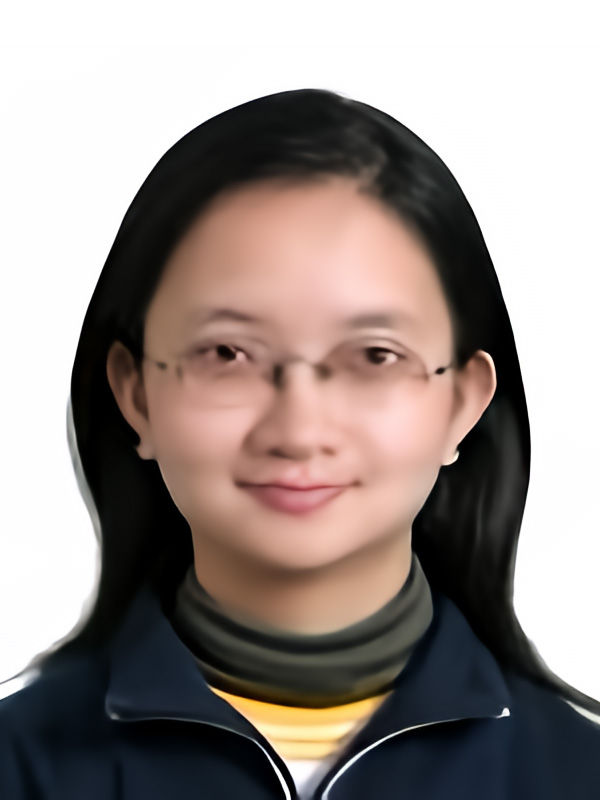
Yean-Ru Chen is an Associate Professor in Department of Electrical Engineering of National Cheng Kung University (NCKU), Taiwan. She received her Ph.D. degree in Graduate Institute of Electronics Engineering from National Taiwan University in 2014. She worked in MediaTek Inc. as a senior formal verification engineer in 2014, then worked in Cadence Design Systems Inc. in 2015, and joined National Cheng Kung University in 2016. Her research interests include formal methods, digital circuit design/verification, AI-aided EDA, and quantum circuit design/verification.
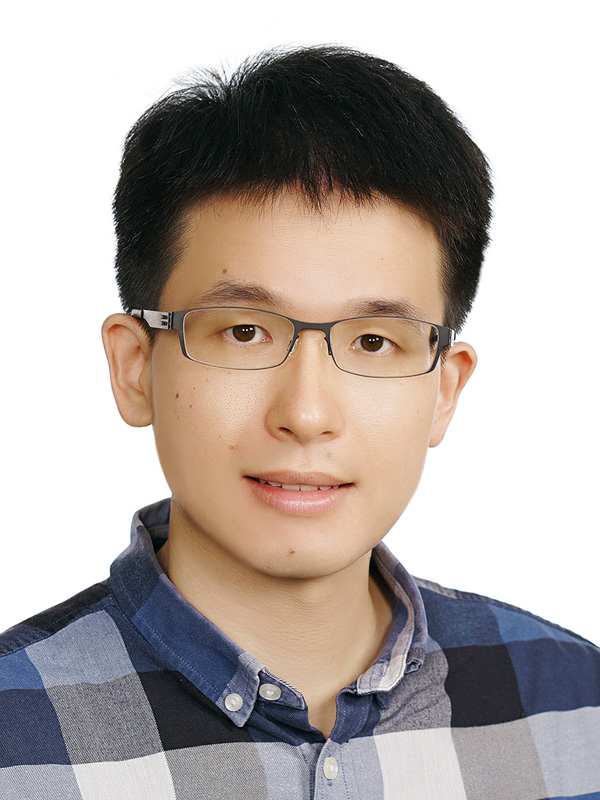
Dr. Nian-Ze Lee is an Assistant Professor in the Department of Electrical Engineering at National Taiwan University (NTUEE), a position he has held since February 2025, and a Visiting Professor at the Institute of Informatics, LMU Munich, Germany. He earned his Ph.D. in Electronics Engineering from NTU in 2021, where he was selected as an honorary member of the Phi Tau Phi Scholastic Honor Society. His dissertation on stochastic Boolean satisfiability received the prestigious Lam Research Thesis Award. From 2021 to 2024, Dr. Lee was a Postdoctoral Researcher at LMU Munich, Germany, focusing on formal methods and their practical applications in software engineering and EDA. His work has been recognized at top-tier international conferences and earned several awards, including an ETAPS Distinguished Paper Award at TACAS 2026, an ACM SIGSOFT Distinguished Paper Award and a Best Artifact Award at FSE 2024, a Best Paper Award at SPIN 2024, and a Distinguished Artifact Award at TACAS 2024. As of 2026, he leads multiple research projects as a principal investigator, including a DFG-funded research project and an Intel-funded collaboration. From 2025 to 2028, he holds the Garmin Scholar Fellowship at NTU.

吳易忠博士於 2021 年畢業於台灣大學電子研究所,並於 2024 年加入陽明交通大學電子所。其研究領域涵蓋數位積體電路設計、高效能系統單晶片設計,應用於生物資訊、人工智慧與機器學習訊號處理之硬體架構。吳教授曾獲多項國際獎項與殊榮,包含 ISSCC Silkroad Award, IEEE SSCS Predoctoral Achievement Award, ISSCC Takuo Sugano Award for Outstanding Far-East Paper, 以及 A-SSCC Student Design Contest Best Design Award.
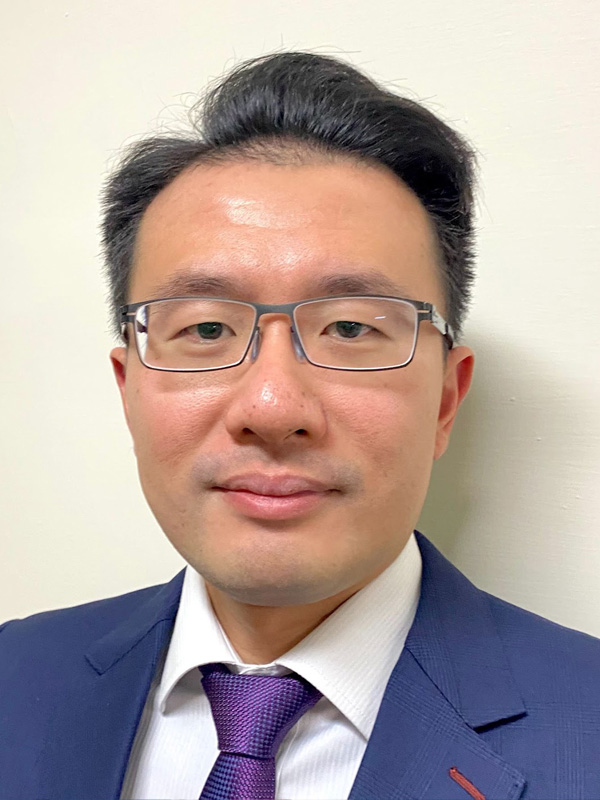
Dr. Chao-Hung Wang received his Ph.D. in Materials Science and Engineering from National Cheng Kung University (NCKU) in 2014. He was an R&D engineer at Macronix (2015–2019), where he conducted research on resistive random-access memory (ReRAM). He then received a LEAP scholarship to the University of California, Berkeley (2019–2020) to develop two-dimensional transition-metal carbide electrode materials for renewable energy applications and served as an advisor to ANAFLASH Inc. through the Berkeley Science Fellows Program. Afterward, he joined TSMC as an R&D engineer, focusing on MEOL and BEOL interconnect metallization. Since 2021, Dr. Wang has been an Assistant Professor at the Miin Wu School of Computing, NCKU, with a joint appointment at the Academy of Innovative Semiconductor and Sustainable Manufacturing. His research focuses on neuromorphic computing, emerging non-volatile memory devices, computing-in-memory architectures, spiking neural networks, and brain-inspired AI. He has authored more than 20 SCI journal and conference papers (824 citations, h-index: 16) and holds more than 8 patents.